

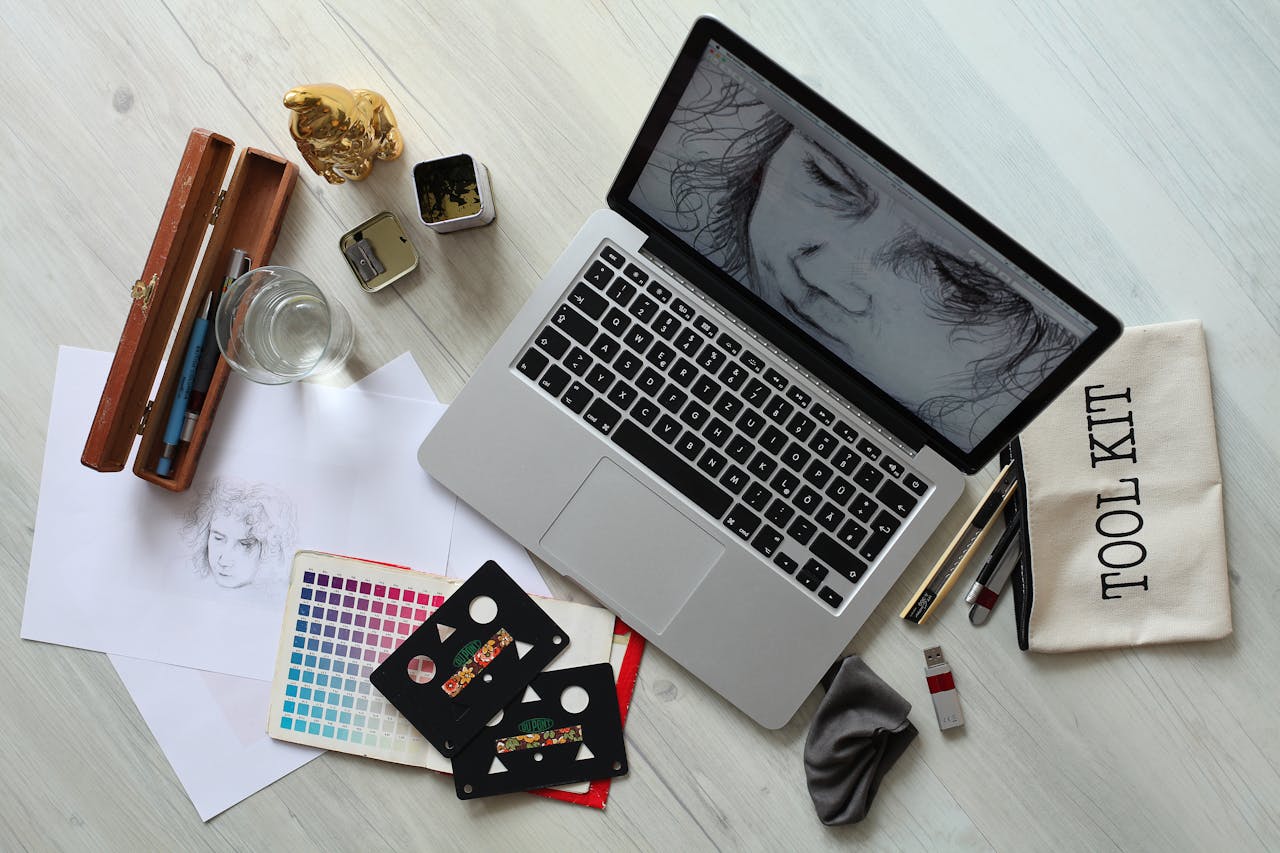
In today’s visually driven world, graphic design transcends mere aesthetics. It’s a pivotal tool that communicates ideas, influences emotions, and drives decisions. Whether it’s a compelling logo, a striking poster, or an engaging website, graphic design plays a crucial role in our daily interactions and the business landscape. Here’s a deeper dive into the colorful world of graphic design and its vast implications.
The Essence of Graphic Design
Graphic design is the art of creating visual content to communicate messages. By applying visual hierarchy and page layout techniques, designers use typography and pictures to meet users’ specific needs and focus on the logic of displaying elements in interactive designs to optimize the user experience.
Key Elements of Graphic Design
- Typography: The choice of fonts not only conveys the character of the message but also significantly affects readability and user engagement.
- Color Theory: Colors evoke emotions and reactions. Designers harness color psychology to convey different messages and provoke certain responses.
- Layout and Composition: These are fundamental in guiding the viewer’s eye and ensuring the content is consumed in the intended order and manner.
- Imagery: From photography to illustrations and icons, images play a vital role in making designs attractive and helping convey complex messages quickly.
The Tools of the Trade
Graphic designers are armed with an array of tools and software that continue to evolve. Adobe Photoshop, Illustrator, and InDesign are industry standards, but new tools like Sketch and Affinity Designer are gaining popularity for specific tasks like web design and vector graphics.
Applications of Graphic Design
- Branding: Graphic design helps in crafting brand identities that resonate with consumers, from logos to color schemes that align with the brand’s ethos.
- Advertising: Whether digital or print, good design can cut through the noise of an overcrowded market.
- User Interfaces: In digital design, the user’s experience hinges heavily on how well the visual elements are laid out and interact.
- Publications: Magazines, newspapers, books, and ebooks all rely on graphic design to layout text, images, and other graphics in an attractive, readable format.
- Packaging: Well-designed packaging does not only protect the product but also markets the products and enhances the brand’s image.
The Impact of Good Design
Good graphic design doesn’t just catch the eye; it can also boost sales and ensure the effectiveness of marketing efforts. Well-designed materials can increase visibility, build customer relationships, and enhance user interaction. It’s not just about beauty; it’s about function and communication. As Steve Jobs once said, “Design is not just what it looks like and feels like. Design is how it works.”
Staying Ahead in Graphic Design
The field of graphic design is dynamic, with trends and technologies constantly evolving. Successful designers stay ahead of trends, learn new software, and continuously refine their skills. They also understand that the essence of good design is clear communication, no matter the medium.
Conclusion
In conclusion, graphic design is a powerful tool that shapes how we perceive the world around us. It’s a blend of art, technology, and strategic thinking. For businesses, it’s an indispensable tool for building identity and influencing consumer perception. For the rest of us, it’s an ever-present element of our digital and physical landscapes, influencing our choices and enriching our interactions with the world. Whether in the hands of a skilled professional or a passionate amateur, graphic design remains one of the most influential art forms of our time.